Understanding Structural Racism
Understanding structural racism, recognising white ignorance, and moving from awareness to meaningful action for racial equity.
This section of the resource provides an introduction to understanding;
- Race and racialisation
- Structural and institutional inequity
- Limits of awareness
- What this looks like in public engagement
It also includes some useful prompts to help you reflect on your own practice.
Understanding race and racialisation
Race
Race is a confusing idea because it is a construct, but one that can feel very real, with all too real racist outcomes. Race is not a biological fact. Forms of scientific racism, such as Eugenics, chose specific physical characteristics (in their case, things like skin colour, hair texture, skull shape and weight) to try and statistically differentiate between groups of people and link these statistics to politically salient features such as criminality or intelligence. Linking physical characteristics or sometimes social, cultural and political practices to race is called racialisation and is usually oppressive. Contemporary scientific research has debunked any underlying biological basis for race. Nonetheless, race is still an influential construct that shapes many aspects of our lives, from educational outcomes to access to high-quality health care.
Racialisation
Racism is a form of oppression that comes from discriminating against people (individuals, groups, communities or whole countries and continents) on the basis of race. The process of racialisation inscribes racist frameworks across many different things: institutional metrics, people’s hair, and cultural practices such as visiting museums. These racist frameworks operate to create hierarchies by ‘othering’ certain groups. It is important to note that in the UK, such frameworks enshrine Whiteness as both an invisible and universal form of being human, against which everyone else is negatively compared. In this sense, everyone in the UK experiences racism and racialisation, but White people experience these practices as forms of personal and structural advantage, sometimes referred to as white supremacy. This is evidenced in data on educational achievement, health outcomes, employment statistics and more.
Structural and institutional inequity
We can think of racism in two related ways. First, people and groups can be purposefully racist. That is, racist people can and do enact racist abuse towards other people. This can take many forms, from the obviously violent and threatening to workplace discrimination. Many people think that this is all racism is. However, it is also important to think of racism as a structural inequality because it has been found to shape whole systems as well as thoughts and behaviours. For instance, in the UK, the education system is considered structurally racist, as is the legal system. From this perspective, we are all working within racist structures and likely to be racist unless we actively work against it. It is possible to be racist even if you did not purposefully racially abuse someone on the way to work today.
Seeing racism as structural and individual is crucial for understanding, challenging and changing embedded racist practices as well as individual acts of racism. Many people who experience racist discrimination in the UK second-guess whether their experience was racist or not. This is because structural racism can feel hard to pin down unless you know about it. For instance, when Black colleagues are greeted in meetings as the catering staff, or when Chinese colleagues endlessly have their names mispronounced and are talked over in meetings, these are forms of racism. If we are unable to recognise and talk about racism, it is hard to challenge or change these practices.
Limits of awareness
Learning about inequality is just the beginning. Real change happens when we move beyond awareness and start addressing the deeper patterns that keep things unequal.
One key barrier is sometimes called 'white ignorance.' This refers to more than a lack of information; it describes how systems and institutions structure knowledge so that important truths about racism and injustice remain hidden or ignored, protecting the status and comfort of those who benefit from the current system. For example, school curricula may focus mainly on white histories, while leaving out or minimising the contributions and experiences of Black, Asian, and other minoritised communities. White ignorance is a key feature of white supremacy because it allows people to claim they did not know or understand how racism shapes all our lives. This kind of selective knowledge-sharing allows dominant groups to avoid facing their role in ongoing harm, it also really limits our capacity for change.
Another trap worth noticing when it comes to racial equity is tokenism. This takes many forms and is a key strategy of white ignorance. Sometimes, institutions use anti-racist language to meet funder expectations or look progressive, but do not follow through with real action. Racial equity priorities can end up watered down into safer, less challenging projects. It can also take the form of treating racial equity as just an academic topic, rather than a real issue about power and resources. Organisations might run workshops or use new language, but crucially, unless they change how they hire, fund, or make decisions, nothing truly changes.
Learning about racism can help institutions feel less guilty, but if it does not lead to sharing real power, old patterns remain. To move forward, we need to go beyond awareness and commit to accountability, shared decision-making, and lasting change.
Performative awareness
| Structural transformation
|
|---|
What this looks like in public engagement
In public engagement and community-university partnerships, breaking down white ignorance means changing our everyday ways of working, from daily processes to how we build relationships.
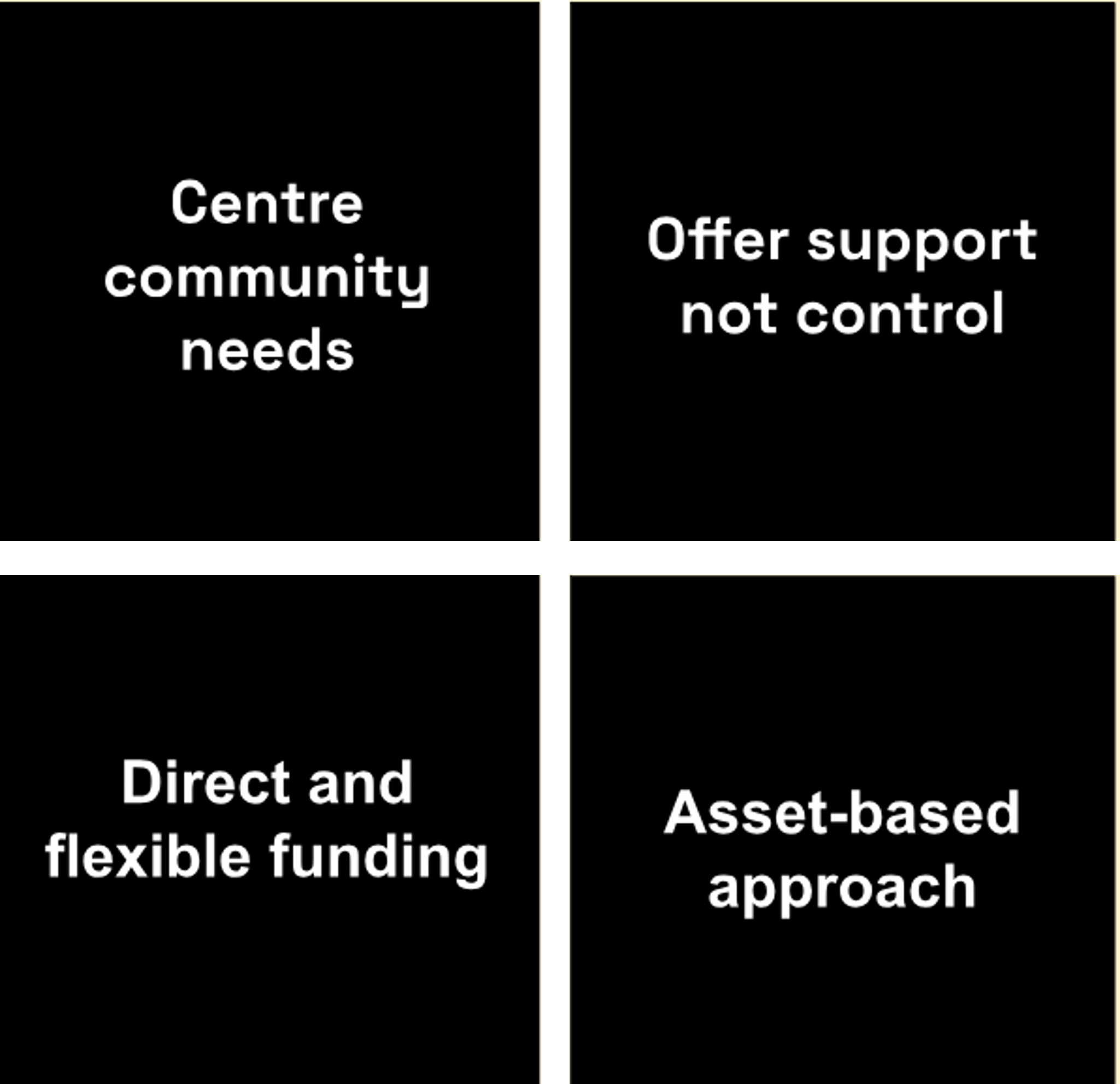
- Set aside the academic hat. Instead of sticking to strict agendas or academic rules, create flexible spaces for open, caring conversations that centre what the racialised-as-minority community needs. Avoid pushing official definitions or complicated reviews onto partners. Let them describe and shape their work in their own way.
- Offer support by handling background tasks like setting up meetings, tracking timelines, or preparing funding documents, so partners do not have to. Make sure your help does not mean taking over. The community should always make the main decisions.
- Make sure racially minoritised communities, groups or people have direct and flexible funding. Avoid grants that keep money within universities or come with lots of conditions. Find ways to get funding straight to local organisations so they can cover their costs and decide what works best for them.
- Begin with what the community already does well. Build on their strengths, stories, and ideas, instead of focusing on gaps. Use your resources and influence to support community projects and help share power more fairly.
Reflect on your practice
Use these questions to reflect on whether your everyday choices might be reinforcing racial inequity:
- Do you believe you fully understand how racism impacts your work? What steps do you need to take to gain a deeper understanding?
- Where in your engagement work do we treat racism as a lack of knowledge rather than recognising it as an issue of power dynamics?
- Are your racial equity discussions leading to changes in your budget and decision-making processes?