Discovery Planet Pop-Up
A pop-up venue based in an old shop and other venues, delivering science activities to people in east Kent who don't regularly engage with science.
Snapshot
Discovery Planet is an award-winning social enterprise that brings STEM (science, technology, engineering and mathematics) activities into familiar community spaces. It removes barriers, such as travel, cost and unfamiliar venues, for people underrepresented in science engagement. Since 2013, more than 25,000 people have taken part through school workshops, family events and community sessions. The programme has built long-term community relationships, supported young volunteers, adapted activities using community feedback and led to the creation of the Discovery Planet Community Interest Company.
Discovery Planet is a programme based at the University of Kent. It received funding from the Science and Technology Facilities Council (STFC).
Background and Purpose
In 2013, King’s College London published the ASPIRES report, which examined the science and career aspirations of young people aged 10-14. Key findings showed that “most young people have high aspirations - just not for science” and that family ‘science capital’ (the science-related knowledge, experiences and connections available to a family) is key. The report also found that most students and their families didn’t have an awareness of where science could lead and felt that science careers were not for them because of the image of scientists being “brainy”. The stereotypical image of a scientist (white, male, middle-class) deterred those who did not match it. These findings have been foundational to Discovery Planet’s aim of proactively engaging young people in fun and engaging STEM learning activities and experiences.
Approach
The Discovery Planet team partnered with researchers from the University of Kent and UKRI-funded STEM Ambassadors in applying for funding from STFC and other sources including Royal Society of Chemistry, Institute of Physics, UK Space Agency, and local funding. A regular programme of STEM engagement activities emerged from these collaborations, delivered from pop-up venues and targeted at the 7-14 years age group and their families and wider communities.
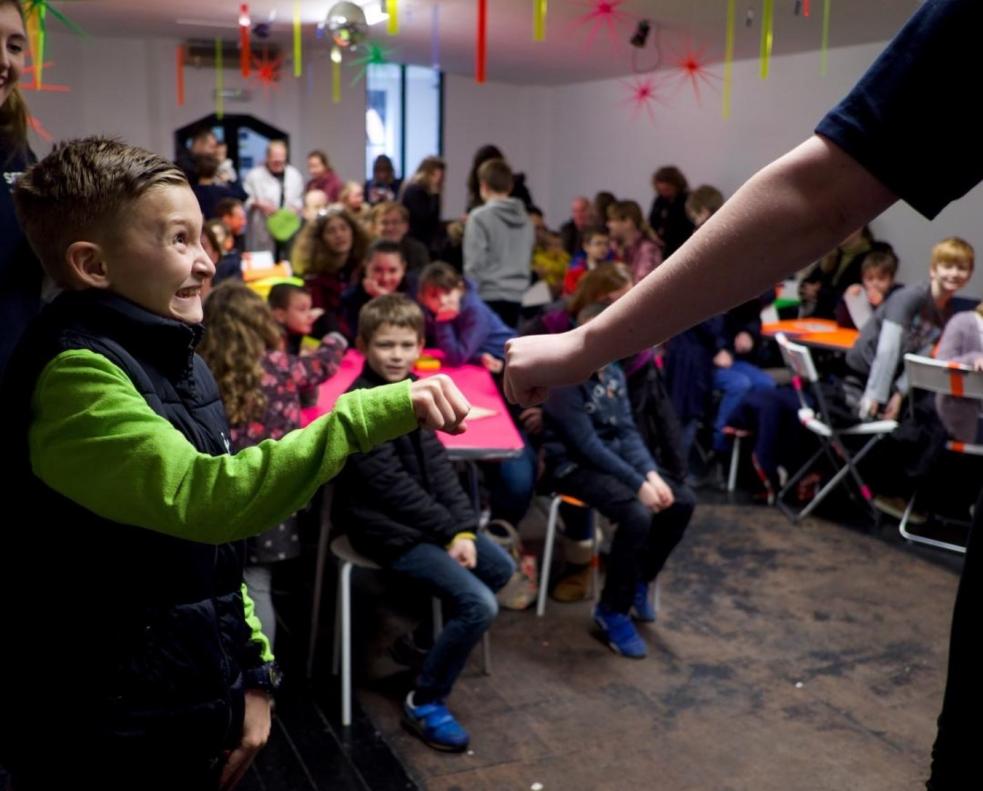
Discovery Planet ran their first programme in 2013. Typically, children and their teachers would be invited to attend workshops delivered by the Discovery Planet team in pop-up venues ranging from empty shops - including one on Ramsgate High Street - to old nightclubs. Workshops were aligned with the school curriculum and would each have at least three hands-on activities using everyday objects, which boosted interaction.
Feedback from teachers indicated that students were enjoying the sessions, and children who attended weekday interactive sessions would return with other family members for Saturday sessions. These provided space and time for the whole community - children and adults - to come and play with the activities all day.
Community days were the key to success because the whole family getting involved in sessions offers an opportunity for parents/carers to build confidence in encouraging their children towards STEM. This observation aligns with the ASPIRES study’s ‘family science capital’ finding. Additionally, the team took community feedback on board and revised their programme based on this. As an example, a special 'quiet session', with adapted delivery methods, was held for families with members with additional needs on Saturday morning.
A programme steering group meet up a couple of times a year to assesses how they want the project to evolve. The group includes young people who engage with the programme and their family, teachers, and other local people involved in the project.
Arriving at the best methodology for evaluating impact in a community setting can be challenging because of the complexity of the context and processes at play. The team sometimes found that collecting data during a workshop did not prove effective or accurate as people would say what they thought the team wanted to hear. For instance, people might be embarrassed to say they don’t engage with science activities so might say they did so more often than was accurate. The team tested different approaches to evaluation which showed that observation and informal conversations were the best approach. This emergent evaluation method was what the community needed to feel respectfully engaged in speaking about their experiences.
Outcomes and impact
Over the past 12 years at least 25,000 people have engaged with Discovery Planet through workshops and events held at pop-up venues. Attendance at workshops has reached up to 150 young people per day. Loyalty cards were introduced as a way of monitoring repeat attendances and capturing some more detailed feedback, which showed that some people attended sessions regularly. This suggests a reputation of high quality has been created and the audience trusts that the Discovery Planet offer is worth repeat visits.
Some young people involved took part in teaching their peers at workshops. This was either on a voluntary basis or sometimes were remunerated at the living wage. The project team recruited these sixth formers by word of mouth, posters in schools, and making presentations during assemblies. The young people learned skills in health and safety, safeguarding, working as a team, communication, and presentation.
Legacy
The Discovery Planet Community Interest Company was incorporated in 2015 and is both the base of operations of this programme and its legacy. The Discovery Planet team have ambitions to open another pop-up like the one they ran on Ramsgate High Street. They also want to expand to people who do not typically engage with this type of activity. Ultimately, the team want to find out and deliver back to the community what it is they want from science engagement in the future.
Further recommended resources
Acknowledgements
- Council Remit: STFC
- Producers: Discovery Planet C.I.C
University Affiliation: University of Kent
This case study was written by NCCPE Associate Furaha Asani in collaboration with UKRI.