Visions for the Future of Community-Engaged Research: working in partnership across the voluntary and academic sectors.
What does the future of community research partnership look like? From our different but complementary vantage points, one rooted in Birmingham's voluntary, community, faith and social enterprise (VCFSE) sector, the other in the academic world, we share a common conviction: the most meaningful research begins and ends with people. Here, we each reflect on where we've come from, and what we're hoping for as we move further into 2026.
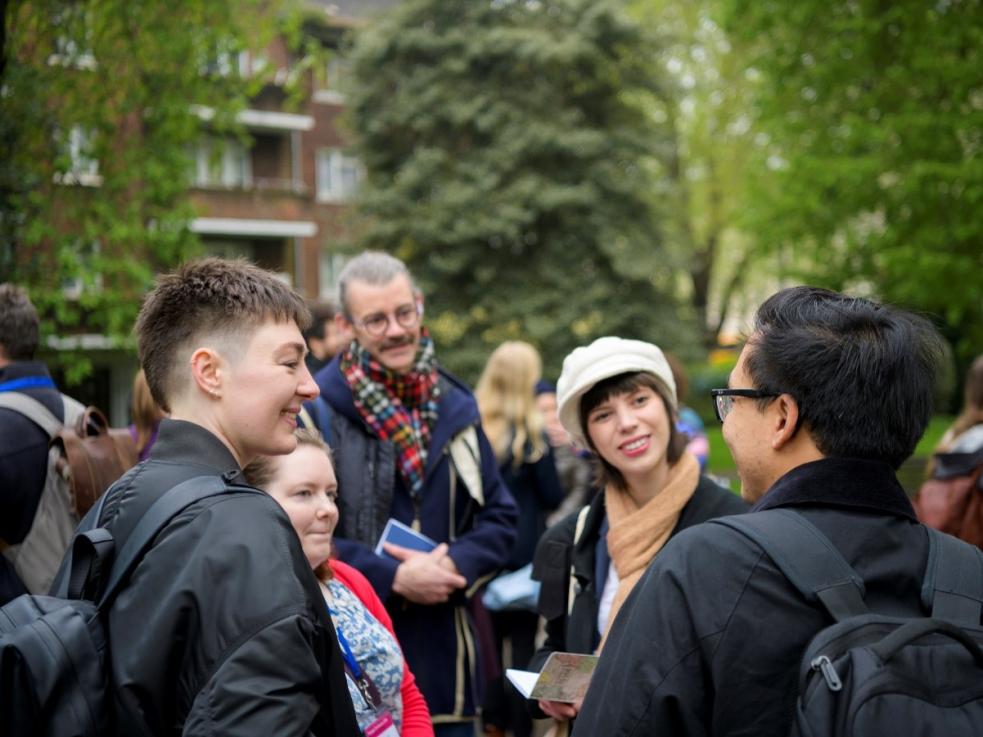
A collaborative blog post by Keshena Partridge-Bowie, Community Research Manager at Birmingham Voluntary Service Council (BVSC), and Kerry Rickerby, Community Engagement Officer at the University of Birmingham.
University of Birmingham Perspectives
Working in community engagement at the University of Birmingham for the last 4 years, I've seen how the future of community and research-related engagement depends on relationships built on trust and genuine listening.
For me, meaningful engagement begins not with a project plan, but with a conversation, one that values people's experiences and aspirations as much as academic knowledge.
Listening to communities helps us understand what matters most to them and how research can sometimes support those priorities. Not all interactions are centred on research; sometimes it's simply about building relationships, creating opportunities to connect, and inviting communities into university spaces. These moments can help change perceptions and raise aspirations, as those who may not see universities as places for them begin to feel a genuine sense of belonging.
When trust is present, collaborations become mutually beneficial and research moves from being done to communities to being created with them.
I've learnt that trust grows through time, consistency, and shared decision-making, through showing up, following up, and being honest about what's possible. As engagement across the sector evolves, I hope we continue to make space for listening as a core practice. It's the foundation for research that not only has impact but also truly belongs to the communities we serve.
BVSC Perspectives
At BVSC, we've been supporting Birmingham's voluntary and community sector for decades, connecting organisations, strengthening their capacity, and making sure the voices of communities across our city are heard where it matters. Over recent years, our research work has taken on a sharper focus: not just researching about communities, but building the conditions for communities to shape and lead research themselves.
That shift feels especially important as we head further into 2026. Birmingham is one of the most diverse cities in Europe, and that richness of experience, perspective, and knowledge is one of our greatest assets. Yet too often, the people who know their communities best, the residents, the grassroots volunteers, the neighbourhood organisations quietly holding everything together, are treated as data sources rather than genuine partners in generating knowledge.
Our Community Researcher training is one answer to this. By training people from within communities to design and carry out research on issues they care about, we're not just producing better evidence, we're shifting who gets to ask the questions in the first place. Community Researchers bring contextual knowledge, relational trust, and lived experience that no external researcher can simply import. And the learning goes both ways: as they develop research skills, they also help us think differently about what good research looks like.
Initiatives like CHERP, the Community Hub for Engagement in Research Practice, give me real hope for what partnership can look like at scale. Bringing together local people, community organisations, researchers, and health professionals across Birmingham and Solihull, CHERP is creating the connective tissue that has so often been missing: a shared space where research ideas can be surfaced from communities rather than handed down to them, and where collaboration happens by design rather than by accident.
My vision for 2026 and beyond is one where the voluntary sector, and the community members it supports, are not an afterthought in the research ecosystem but an equal partner within it, where funders, universities, and statutory bodies actively invest in the relationships, time, and infrastructure that genuine co-production requires. It's also a vision where community organisations are resourced to engage, not just invited to. Participation without support isn't equity.
What gives me confidence is the quality of the partnerships already taking shape. When BVSC's research team works alongside colleagues at the University of Birmingham, it feels like exactly the right direction of travel.
A Shared Aspiration
Reading each other's reflections, what strikes us most is how much we agree — not because we work in the same sector, but because we've both arrived at the same conclusions through experience. Trust takes time. Listening is a skill, not a given. And the infrastructure for genuine partnership — the meetings, the follow-ups, the honest conversations about what's possible — needs to be valued as part of the work, not treated as a distraction from it.
As we look ahead, we're both excited about deepening our collaboration and contributing to a Birmingham where research is something communities do, not something that happens to them. If you're working in this space — whether from a community organisation, a university, the NHS, or anywhere else — we'd love to hear from you.
About the Authors
Keshena Partridge-Bowie, keshenab@bvsc.org, and Kerry Rickerby, k.rickerby@bham.ac.uk.
BVSC (Birmingham Voluntary Service Council) is Birmingham's Council for Voluntary Service, supporting the VCFSE sector to grow, connect and thrive. Find out more at bvsc.org.
The University of Birmingham's community and public engagement work brings together academics, communities and partners to ensure research reflects and responds to the needs of the people it seeks to serve. Find out more about UoB’s Public and Cultural Engagement Strategy - University of Birmingham.
CHERP (Community Hub for Engagement in Research Practice) is a partnership initiative strengthening community involvement in health, social care and wellbeing research across Birmingham and Solihull. Find out more at cherp.org.uk.