REF 2029: Shaping Excellence Together
REF 2029 guidance arrives at a moment of turbulence for higher education. For some, the announcements may bring relief: proposals they feared would be burdensome have been moderated, and the exercise feels more aligned with the last REF. For others, disappointment: bolder ideas about research culture appear diluted, and there are concerns over how the details of the guidance might impact on (for instance) smaller units of assessment.
NCCPE Co-Directors, Sophie Duncan and Paul Manners, believe REF 2029 is a pragmatic compromise - but one that creates space for a more open, connected future.

Three ways knowledge is created
The REF has always reflected-and accelerated-shifting ideas of excellence. Behind these shifts sit three broad approaches:
- Mode 1: Scholarly – Deep, blue-sky, discipline based research that advances theory and understanding.
- Mode 2: Applied – Problem-solving research, often collaborative, aimed at practical solutions.
- Mode 3: Civic and Systemic – Research co-created with partners to tackle societal challenges, valuing diverse perspectives and shared responsibility.
REF 2029 doesn’t force a choice between these modes. Instead, it allows all three to be expressed - and that matters. A thriving higher education system depends on a balance of different kinds of excellence. Foundational scholarship gives us depth and rigour. Applied research turns ideas into solutions. Civic and systemic approaches ensure those solutions are shaped with and for society. When these modes coexist - and interact - the system becomes more innovative, more resilient, and more trustworthy.
REF 2029 matters because it creates space for this diversity: building on what is established while remaining open to new ways of creating & sharing knowledge for public benefit.
What’s changed across the profiles
REF 2029 introduces three profiles that together tell the story of research excellence:
- Contribution to Knowledge and Understanding (CKU)
Replaces “Outputs.” No more per-person quotas - instead, a representative pool of diverse outputs, opening space for disciplinary rigour, applied innovation, and plural knowledge practices. - Engagement and Impact (E&I)
Impact remains assessed on reach and significance, but REF 2029 now explicitly welcomes narratives about engagement across the research lifecycle and responsible practices that enabled or enhanced impact. Co-production, participatory design, and civic partnerships can be evidenced confidently as mechanisms that deepen reach and significance. - Strategy, People and Research Environment (SPRE)
SPRE reframes the old “Environment” statement. It asks institutions & units to think deeply about strategy and people - not as slogans, but as the foundation of resilient, adaptive research cultures. It invites reflection on how mission and values guide decisions, how trade-offs are managed, and how investments in people and infrastructure deliver outcomes that matter.
The bigger picture: Engaged Futures
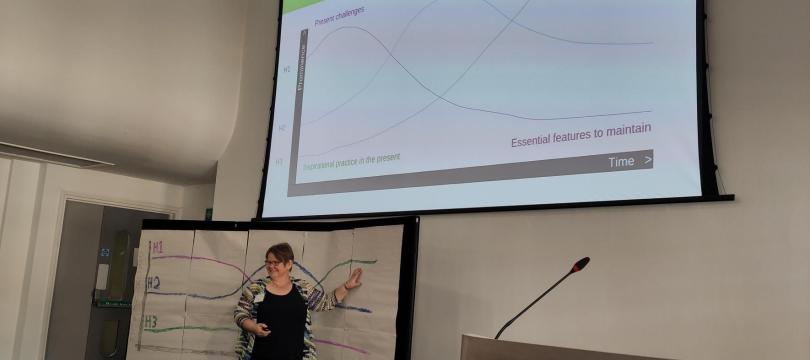
REF is part of a longer-term transition for the sector. But more needs to change. The NCCPE’s Engaged Futures initiative is stepping way beyond 2029, to consider the kind of HE system society will need in 2045. This frees up our thinking and helps think beyond the next REF to our long term ‘value proposition’.
Hundreds of people from inside and outside the sector are working with us to examine the cultures, values, partnerships and accountability arrangements we will need to align research with public purpose. It sets out principles for a sector that is open, connected, and committed to societal good.
For NCCPE, this matters deeply. For over a decade, we’ve worked with universities to embed engagement strategically - not as an add-on, but as a core enabler of research excellence and societal trust. We recognise that REF 2029 is a stepping stone towards that. The way it is framed encourages us to:
- Re-centre purpose: Show how institutional mission and values guide decisions and investments.
- Value all contributions: Recognise the full ecology of roles critical to research excellence including researchers, technicians, engagement professionals, librarians, professional services staff, and doctoral students.
- Embed connectivity and public benefit: Make collaboration integral to research culture.
- Learn in public: Evidence adaptation and reflection, not just activities and compliance - to show the distance travelled since REF 2021 and to show a deeply intelligent grasp of our context, strengths and the challenges we need to navigate.
Crucially, REF 2029 encourages universities to value collaborators and partners. REF narratives should make visible the contributions of those beyond the academy - community organisations, civic bodies, industry - whose expertise and experience make research impactful & valuable. Fairness and reciprocity are the foundation of a research system that serves society.
A call to work together
The process of developing REF 2029 has not been easy. It surfaced deep tensions - and, at times, infighting - about what excellence should mean. That debate matters, but it risks distracting us from our long-term purpose: ensuring the vitality of research and its alignment with what society needs.
REF 2029 is not perfect - and it won’t resolve every tension. But it does create space for a more diverse and adaptive understanding of excellence. How we use that space matters. If we approach REF as more than compliance - as a chance to reflect, learn, and connect purposefully - we can strengthen both research and its contribution to society. That is the principle we endorse: a system that values rigour, responsiveness, and public benefit, and keeps asking the bigger question - what kind of research culture do we want for the future?
What next?
Over the coming months, NCCPE will share interpretive guides, practical tools, and events to help colleagues respond to REF confidently and creatively. We also invite you to join our Engaged Futures work - shaping a longer-term vision for the sector that stretches far beyond REF 2029.
Our Engage Summit in April will be a key moment to take stock of the past, present, and future of higher education. We hope you’ll join the conversation.